




What is pulse oximetry?
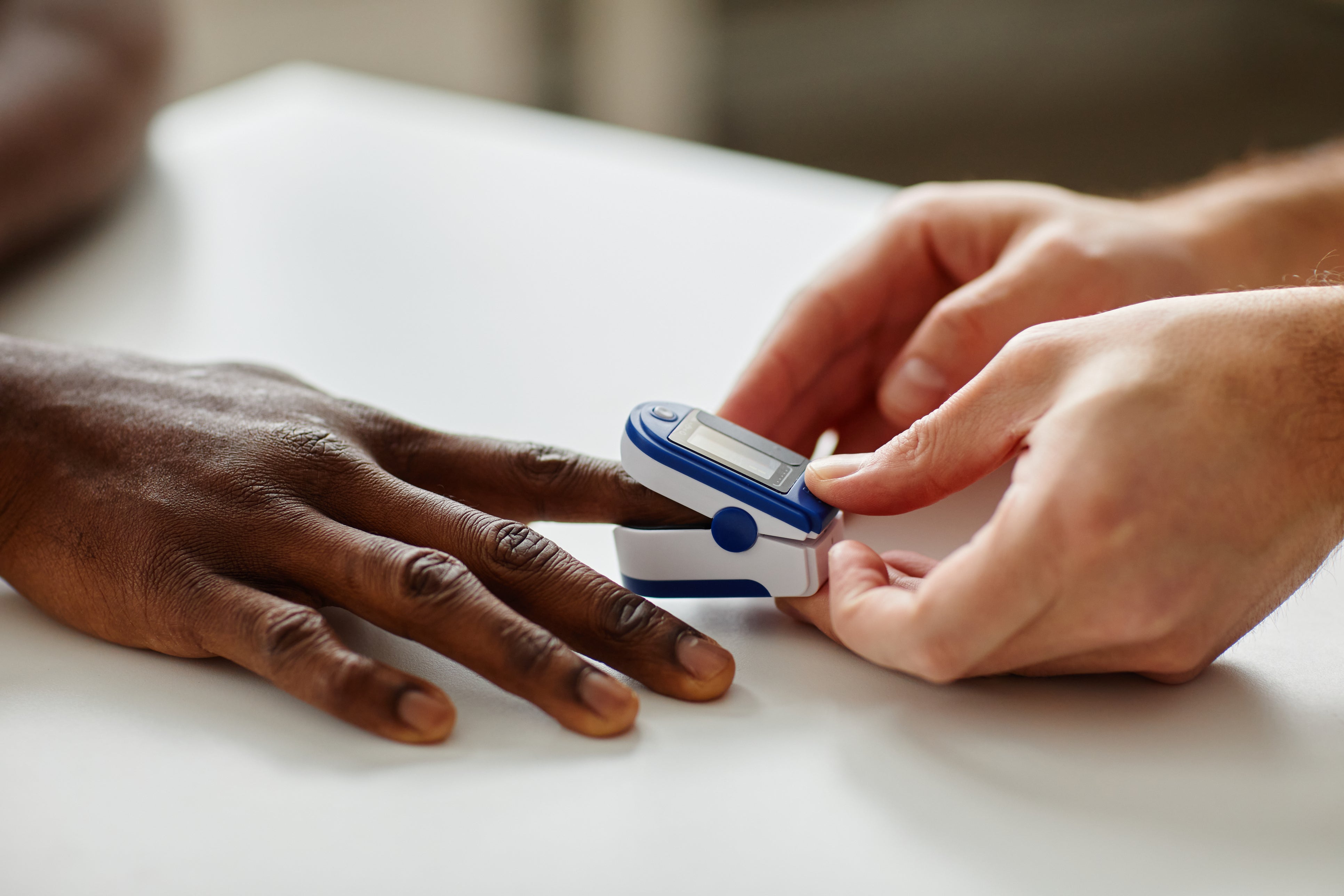
Pulse oximetry is a test to measure oxygen levels in your blood. This is called your oxygen saturation level. It’s a simple, painless test that uses a sensor placed on your fingertip or earlobe.
What is pulse oximetry used for?
Pulse oximetry can help your healthcare professional to understand if you have a lung condition. Your blood oxygen levels may be lower than they should be if you have a lung condition. The more damaged your lungs are, the more likely there is to be a problem with your oxygen levels.
It can also be used to monitor an existing lung condition by measuring your oxygen levels over time. For example, during exercise or when you’re asleep.
Pulse oximetry can help to decide if someone needs to be looked after in hospital, for adults with lung conditions like pneumonia and children with lung problems.
How can I prepare for a pulse oximetry test?
Nail varnish or false nails can block the light and affect your test results. You’ll be asked to remove them on one finger only. This will help get an accurate result.
Pulse oximetry results can also be affected by some medical conditions, including anaemia and Raynaud’s syndrome. Talk to your healthcare professional if you have other medical conditions.
What happens during a pulse oximetry test and how does it work?
You’ll have a small device called a pulse oximeter clipped to your finger or earlobe. The pulse oximeter shines two types of light through your fingertip or earlobe:
-
red light
-
infrared light.
The pulse oximeter measures how much light is absorbed by your blood. This shows how much oxygen is in your blood.
Blood containing lots of oxygen absorbs more infrared light. Blood without enough oxygen absorbs more red light.
Can I do a pulse oximetry test at home?
Your healthcare professional may give you a pulse oximeter to use at home if you’re being treated in a virtual ward or you need to monitor your oxygen levels at home. You’ll be given clear instructions on how and when to use it.
Pulse oximeter results on black or brown skin may be less accurate because they can show a higher reading of oxygen level in the blood. If you have black or brown skin and have been told to use a pulse oximeter at home, you should continue to use the oximeter and monitor any changes in your readings.
It’s also possible to buy pulse oximeters online and in pharmacies. However, it’s not recommended unless your healthcare professional has asked you to use a pulse oximeter and given you advice on how to use it. This is because home-use pulse oximeters can sometimes give results that are not accurate and may be misleading. Home-use pulse oximeters are lower quality than ones used in hospitals.
Talk to your healthcare professional if you have concerns about using a pulse oximeter at home.
What do the results mean?
The pulse oximeter display shows the percentage of oxygen in your blood. A healthy blood oxygen saturation level will be around 95–100%.
If your oxygen level is below 92%, your healthcare professional should refer you for an assessment. This usually involves a blood gas test to see if you need oxygen therapy. Your healthcare professional will help you to understand your result.
A change in your oxygen level may mean that your lung condition symptoms have got worse or you’re experiencing a flare-up (exacerbation).

Get support
Call or email our helpline for support with any aspect of living with a lung condition – whether you need practical advice, emotional support, or answers to health-related questions. You can also find support through our groups.