

What are sleep breathing tests?
Sleep breathing tests help to diagnose a range of conditions that affect your breathing while you sleep, such as obstructive sleep apnoea (OSA). These conditions are sometimes called sleep disordered breathing.
When will I need a sleep breathing test?
Your GP may refer you to a sleep specialist if you have symptoms of sleep disordered breathing which have not improved after you’ve made simple changes to your sleep and lifestyle.
Symptoms when you sleep:
-
breathing that stops and starts
-
making gasping, snorting or choking sounds
-
waking up a lot
-
loud snoring.
Symptoms when you’re awake:
-
feeling very tired
-
a headache when you wake up
-
changes in your mood
-
finding it hard to concentrate.
How can I prepare for a sleep breathing test?
Your first appointment
You’ll have an appointment at your local sleep centre or hospital before your sleep breathing test. You’ll meet with a sleep specialist who will ask you about:
-
your symptoms
-
how long you’ve been having symptoms
-
any other health or lung conditions
-
any medications you use or have used – sleeping tablets, anti-depressants and prescribed painkillers can affect your sleep and make you more tired in the day
-
your job and if you do any shift work.
It can be helpful to keep a symptom and sleep diary to take to your appointment.
Your sleep specialist may also ask you to complete a sleep questionnaire about how sleepy you are during the day. This could be the Epworth Sleepiness Scale or the STOPBang test.
Your sleep breathing test
You should get a leaflet or instructions with your appointment letter. It’s important that you read these carefully, as they will help you to prepare for the test.
On the day of your test, you may be asked to:
-
avoid drinking caffeine and alcohol
-
stop smoking at least 30 minutes before each test
-
avoid sleeping during the day, where possible
-
avoid using creams, hair gel, make-up and remove, nail varnish or false nails – these can affect how the test equipment works
-
wear comfortable, loose-fitting clothes
-
continue to take your medication as normal.
Types of sleep breathing test
You may have one or more sleep tests depending on your symptoms.
Simple sleep test (pulse oximetry)
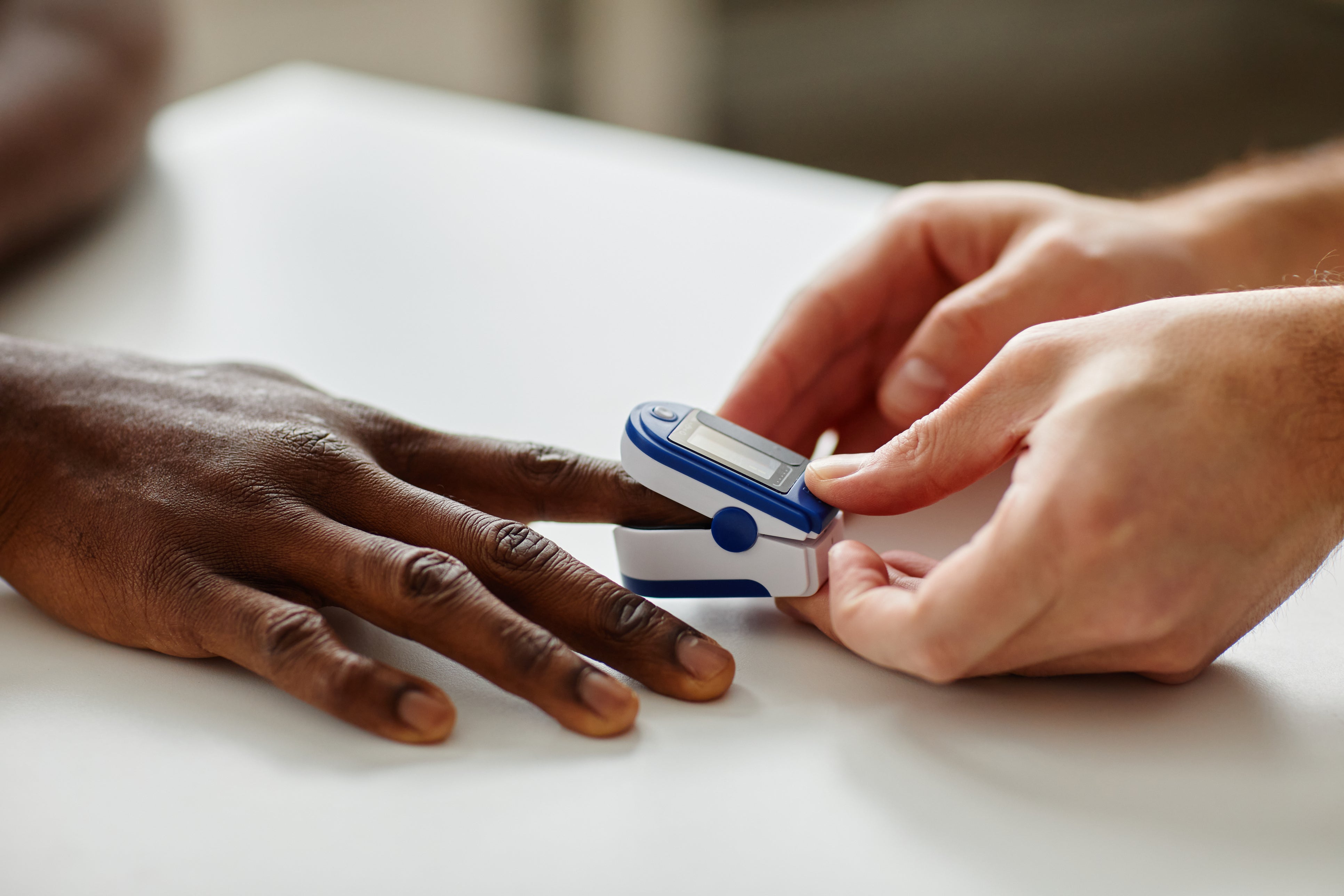
Pulse oximetry is a simple, painless test that uses a small clip on your fingertip or earlobe. It can record how much oxygen is in your blood and your heart rate when you’re asleep.
Your sleep specialist may also want to understand how much carbon dioxide you have in your blood. They may check this by taking a small blood test from your ear or wrist. This is called a blood gas test.
At-home sleep test
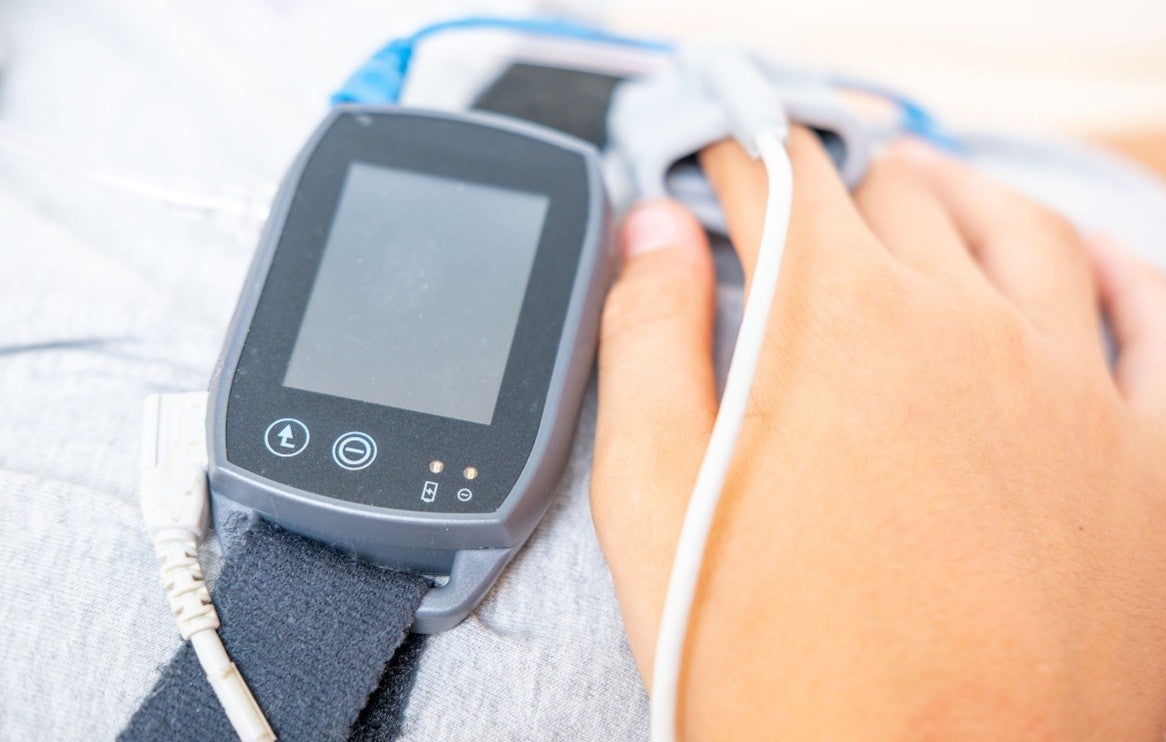
Your sleep specialist may give you some equipment to use overnight in your own home. This usually includes some sensors to wear on your finger and chest, and a recording device to track your measurements while you sleep.
There are a few different types of at-home sleep tests. Some are used for one night. Others may be used over multiple nights. Speak to your sleep specialist for more information about how to use the equipment for your specific test.
Respiratory polygraphy sleep test
The respiratory polygraphy may be done in hospital if the results from the pulse oximetry test or at-home sleep test were not clear enough to diagnose the problem.
A respiratory polygraphy sleep test can measure your:
-
breathing rate
-
oxygen levels
-
heart rate
-
body movement
-
sound, such as snoring.
You’ll wear some equipment while you sleep, including a band around your chest, a small sensor in your nostrils, and a clip (oxygen monitor) on your fingertip.
Polysomnography (PSG)
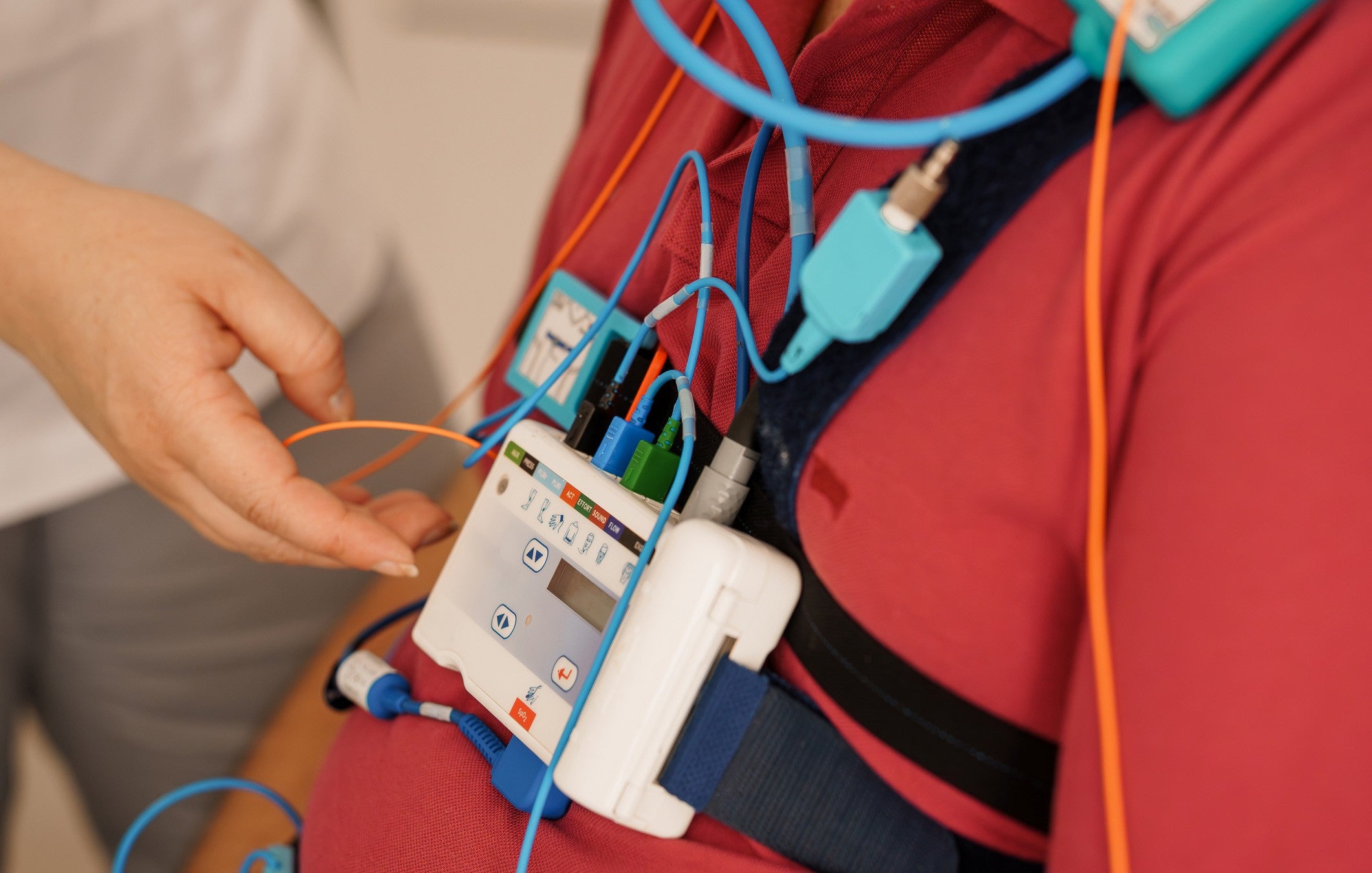
PSG checks for changes that happen in your body while you sleep. You’ll have the test overnight in a quiet sleep clinic or hospital room.
It uses a wider range of equipment to record your:
-
brain activity
-
eye movement
-
muscle activity
-
heart rhythm
-
breathing patterns, including the flow of air through your lungs and body movements
-
oxygen levels.
Your sleep specialist will attach several sensors to your head, chest and legs using sticky pads or bands.
Multiple Sleep Latency Test (MSLT)
The MSLT measures how quickly you fall asleep during the day. This is called daytime sleepiness.
You’ll have a PSG test the night before the MSLT to get accurate results. The MSLT recording equipment will be the same as the PSG test.
Your sleep specialist will ask you to try to fall asleep at different times throughout the day. You‘ll usually have around 20 minutes to sleep.
The MSLT test can take up to a full day depending on your results.
Maintenance of Wakefulness Test (MWT)
The MWT measures your ability to stay awake during the day. This is called wakefulness.
You may have the PSG test the night before the MWT to get accurate results. The MWT recording equipment will be the same as the PSG test.
Your sleep specialist will ask you to stay awake for up to 40 minutes. You‘ll sit in an upright position in a quiet, semi-darkened room with no distractions, such as your phone or TV.
Oxford Sleep Resistance test (OSLER)
The OSLER test measures if you’re able to stay alert when you’re in conditions that are comfortable for sleep. It will be done in a sleep clinic or hospital room several times throughout the day.
You’ll sit upright on a chair in a quiet, semi-darkened room for up to 40 minutes. You‘ll be asked to press a button every time you see a red light.
Non-urgent advice: If your lung condition affects your sleep
Living with a lung condition can affect your sleep. You might find that you have trouble sleeping or your symptoms wake you up during the night.
How we develop our health information

About our health information
All our information is reviewed and updated by Asthma + Lung UK’s experienced Health Advice Team. People living with lung conditions, qualified healthcare professionals and specialists also review our content.
Our information is based on the latest, trustworthy evidence and guidelines. Below is a sample list of the sources referenced in our sleep breathing test information.
- European Lung Foundation. Sleep disordered breathing. Published: 2025
- National Institute for Health and Care Excellence. (NICE), Clinical Knowledge Summary (CKS). Obstructive sleep apnoea syndrome Summary. Published: November 2025
- NICE. Home-testing devices for diagnosing obstructive sleep apnoea hypopnoea syndrome. HealthTech guidance. HTG735. Published: December 2024
If you'd like a full list of the sources we've used to produce our health information, you can email us at healthadvicequeries@asthmaandlung.org.uk.

Get support
Call or email our helpline for support with any aspect of living with a lung condition – whether you need practical advice, emotional support, or answers to health-related questions. You can also find support through our groups.